Edgar Allan Poe
The Pale Blue EyeEdgar Allan Poe is a fourth-class cadet at West Point whose unusual independence and literary instincts make him both an investigator’s resource and a figure of suspicion. He helps Augustus Landor pursue the mystery surrounding Leroy Fry, but his involvement reaches beyond deduction: he falls in love with Lea Marquis, enters an intimate and uncertain exchange with Artemus Marquis, and eventually confronts Landor over a betrayal that has altered their relationship. The novel’s fictional Poe is therefore not simply the poet who recognizes a clue; he is a participant in the investigation whose attachments complicate what he can know and whom he can trust.
Identity and Introduction
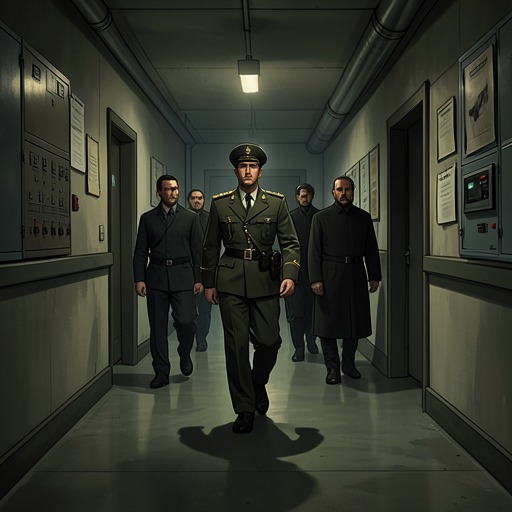
Poe first appears apart from the ordered movement of the Academy. Landor, accustomed to seeing cadets marched between their duties, finds him partly concealed behind a Saint Michael’s pear tree. Poe identifies himself as a fourth-class cadet and addresses Landor formally. The scene establishes a contrast between the institution’s ranks and routines and Poe’s capacity to move independently through them.
His appearance is presented as distinctive: he is slight, with large hazel-gray eyes, lank black hair, and a forehead that seems too prominent for his face. These details contribute to Landor’s impression that Poe is difficult to mistake for an ordinary cadet. Landor later reflects that his first encounter seemed unusually complete in retrospect, while acknowledging how often the importance of an initial meeting is assigned only after a person has become vital. Poe’s conspicuousness is thus both physical and narrative: from the outset, Landor sees him as someone who does not quite fit the expected pattern.
When Poe learns that Landor has been tasked with solving the mystery surrounding Fry, he offers a compact lead: the person Landor seeks is a poet. The remark is brief, delivered in a whisper after Poe checks who might be watching, and followed by a bow and his return to the cadets going to mess. The clue establishes Poe’s ability to read the case through a literary possibility, while his careful approach suggests that he understands the risks of speaking openly.
Informant in the Fry Investigation
Landor later asks what Poe would think of helping him. The offer is deliberately unglamorous: there will be no pay, no public credit, and no assurance that his fellow cadets will ever know what he has done. Landor also explains that his own work as a constable in New York City depended on information from people outside respectable society. Poe listens to this account and accepts the prospect of assisting him.
The arrangement makes Poe a confidential intermediary rather than an official investigator. His work must remain hidden, and its value may be recognized only after it is finished; Landor warns that disclosure could even turn other cadets against him. Poe’s interest is not presented as a search for status or reward. His willingness to take on the task gives Landor access to a cadet’s perspective, but it also places Poe inside the Academy’s climate of rumor and suspicion.
That danger becomes explicit after Randolph Ballinger’s murder. In a report to Landor dated November 27, Poe describes an atmosphere crowded with rumor, scandal, and conjecture, and notes that other cadets watch him strangely as he passes. He suspects that he himself may have fallen under suspicion. The report presents the informant’s position as precarious: his access to information makes him useful, but his secret work also leaves him exposed to the suspicions surrounding the investigation.
Landor’s next recorded exchange with Poe takes place after he leaves a message beneath their secret rock in Kosciusko’s Garden. He asks where Poe was on the night of November 23, the night Ballinger was killed. Poe says that he was in his quarters. The question makes their working relationship newly adversarial: Landor is no longer only directing an informant but testing a person close enough to the inquiry to be questioned as a suspect. The evidence presented here records Poe’s answer, not an independent confirmation of it.
Love and Intimate Attachments
Poe’s relationship with Lea Marquis changes when she tells him that, on waking and seeing him beside her, she found love in his face. Until her declaration, Poe had regarded his feelings as admiration and fascination, without naming them as love. Her use of the word forces him to recognize what he had not allowed himself to acknowledge: he loves her. The exchange marks a clear change in his understanding of his own feelings, and makes the investigation’s personal stakes inseparable from his attachment to the Marquis family.
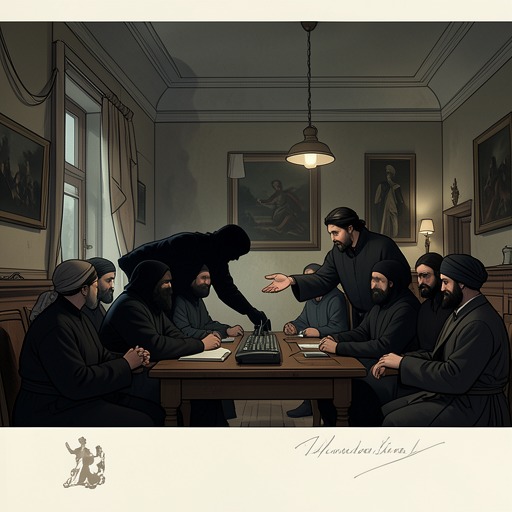
Poe also shares a charged, intimate moment with Artemus Marquis. Artemus asks whether Poe has ever given himself to a woman; Poe answers in elevated language about spiritual attraction, and Artemus responds with a dry laugh before reassuring him that his innocence is among the qualities he finds endearing. Artemus says that he counts himself among those who hold Poe dear. He then takes Poe’s hands and presses his lips to them. Poe’s account registers the gesture with alarm, while Artemus presents it as an expression of tenderness. The episode leaves the nature of their bond open, but makes its emotional intimacy unmistakable and gives their connection a different register from Poe’s love for Lea.
Disguise and Responsibility
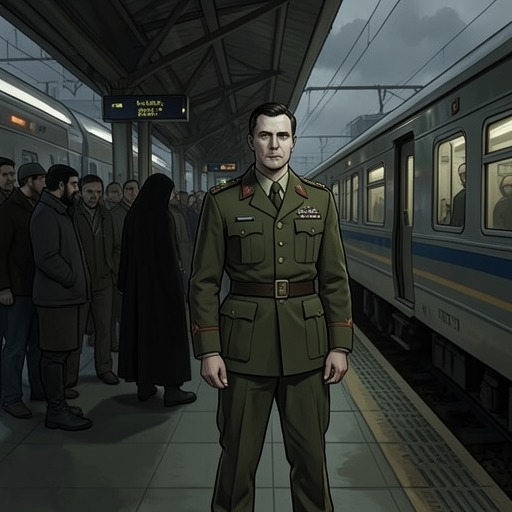
At a gathering involving Gouverneur Kemble, Poe arrives concealed as an Army officer. Landor recognizes him only when a coachman’s lantern reveals his face beneath the disguise; Poe is wearing the uniform of the late Joshua Marquis. The scene connects his ability to adopt a role with the larger problem of appearances in a case where identity and intention are difficult to read. The evidence establishes the disguise and the uniform, without explaining every purpose behind his appearance.
When Captain Hitchcock addresses the incident, Poe steps forward and makes clear that Landor had no part in arranging it. He describes the appearance as his own initiative and accepts responsibility for it. Hitchcock, visibly occupied by more urgent matters, declines to deal with him at that moment. Poe’s intervention is significant even apart from the disguise: he protects Landor from being treated as a collaborator and takes the blame upon himself, an act that contrasts with the later rupture between the two men.
The Icehouse and the Rupture with Landor
During the events at the icehouse, Poe is first seen as a shrouded figure outside the magic circle. Artemus removes the clothes covering him; Poe’s coatee is missing, but the rest of his uniform remains in place. Landor observes a tremor pass through Poe’s body, realizing that he is not dead. The scene places Poe at the center of the ritual’s aftermath, but the passage does not establish from this discovery alone how he came to be there or what he remembers at that moment.
Poe later tells Landor that he began with a startling fact: there was only one heart in the icehouse. He explains that at first he could not recall what had happened in the chamber, describing the gap as a kind of amnesia; as the days passed, details returned. His account makes memory itself part of the investigation. What initially appears inaccessible gradually becomes available to him, even as he shrinks from contemplating one particular horror. The single heart is a concrete discovery, while Poe’s changing recollection signals that the meaning of the icehouse cannot be separated from what its surviving witness can bear to remember.
In a later conversation, Poe asks Landor why he turned on him, asking why Landor chose him of all people. Landor answers that while Poe was partial to him, he would never see the truth. The exchange identifies affection as both the basis of their closeness and an obstacle to recognition. Poe’s trust had made Landor harder to judge; Landor, in turn, chose to break that trust as a means of exposing what Poe could not see. Their confrontation gives the investigative partnership a painful end point: knowledge arrives not as a shared discovery but through the destruction of the confidence that had joined them.
Fictional Poe and Narrative Significance
The novel frames Poe through reports addressed to Landor as well as Landor’s own narration. Poe’s reports show him monitoring the atmosphere among the cadets and responding to suspicion, while Landor’s account describes Poe’s entrance into the investigation, his relationships, and the moments when he becomes a subject of scrutiny himself. This divided presentation makes the reader encounter Poe both as an observer who supplies evidence and as a person whose testimony and loyalties must be assessed.
The historical note explicitly distinguishes this character from the historical record: Poe, like the story’s other real-life figures, is enlisted in a fictional enterprise, and the author states that the historical Poe killed only on paper. Within that enterprise, Poe’s defining function is double. His poetic attention helps set Landor’s investigation in motion, yet his emotional attachments repeatedly challenge the distance an investigator would need. The clue, the secret report, the disguise, and the recovered memory are different forms of interpretation; each brings him nearer to the truth while drawing him deeper into the personal costs of knowing it.